
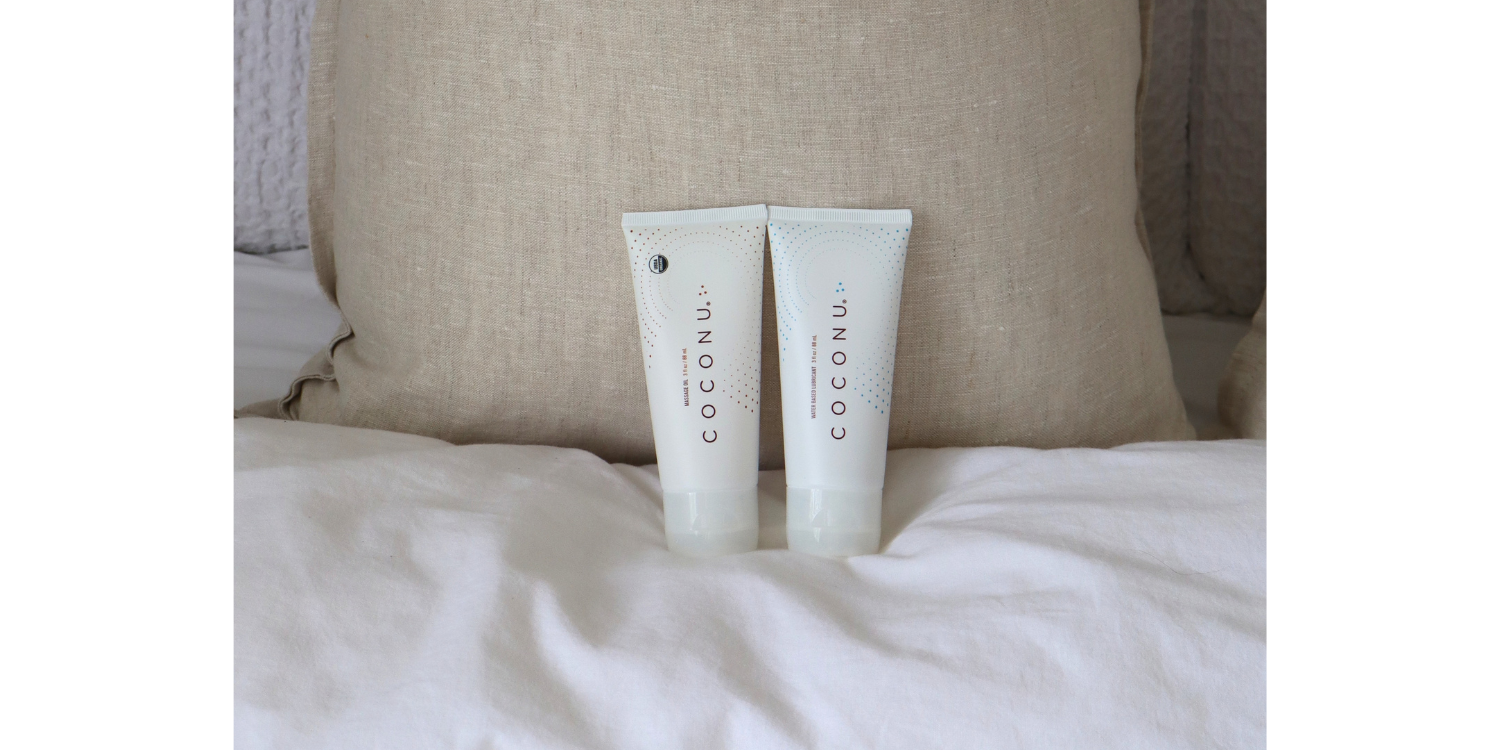
Oil-based lubricant is a good choice when you want a rich, moisturizing feel and lasting glide. Water-based lubricant is a good choice when you want a lighter feel, easy cleanup, or compatibility with latex condoms. The right formula depends on what feels comfortable and what you plan to use it with.
For someone who wants a silky lubricant that stays with them, my first Coconu recommendation is Oil-Based. I also want the choice to be easy when Water-Based makes more sense. If latex or polyisoprene condoms are part of your routine, choose a compatible water-based formula.
You do not have to pick one forever. You might prefer one for slow, skin-to-skin intimacy and the other for a particular toy or condom. Here is what I would consider before deciding.
The main differences between oil-based and water-based lubricant
Feel: Oil-based formulas tend to feel richer and more cushioning. Water-based formulas tend to feel lighter. The exact texture depends on the finished product.
Staying power: Oil-based formulas generally provide longer-lasting glide. Water-based formulas can dry down sooner and need more frequent reapplication.
Condom compatibility: Oil-based lubricant is not compatible with latex or polyisoprene condoms. Water-based lubricant is generally compatible with both; follow the product and condom instructions.
Toy compatibility: Water-based lubricant is widely compatible with toy materials. Oil-based compatibility depends on the exact toy and its manufacturer’s guidance.
Cleanup: Water-based lubricant usually rinses away more easily. Oil-based lubricant may leave more residue and can mark fabrics.
Start with compatibility, then choose the texture you enjoy. A formula can feel wonderful and still be the wrong match for a condom or toy.
Why choose oil-based lubricant
The appeal of oil-based lubricant is the glide. Its oil base does not evaporate like water, so it can keep touch feeling smooth for longer. If stopping to add more lubricant keeps breaking the moment, that staying power is worth considering.
Coconu Oil-Based Lubricant is USDA Certified Organic and has a rich, moisturizing texture. It includes ingredients such as coconut oil, shea butter, and beeswax. It can also be used for body massage, making it useful when you want to move from a shoulder rub into more intimate touch.
I would start here if your priority is lasting glide and you like the feeling of an oil-based product on your skin. Use it according to the label and add more when needed. Long-lasting does not mean you should keep going when something starts to drag or hurt.
Plan for the richer finish, too. Keep a washable towel nearby if you are concerned about bedding, and follow fabric-care instructions for any marks. Choose Water-Based instead when quick cleanup matters more to you.
Why choose water-based lubricant
Water-based lubricant is useful when you want a light texture that washes away easily. It is also a practical starting point when compatibility is your main concern, especially with latex condoms and many toys.
Coconu Water-Based Lubricant is made with organic coconut water, is glycerin-free, and is FDA cleared. It is compatible with latex condoms and silicone toys. I would reach for it when you want those features along with a lighter feel.
Water-based formulas can dry down during use. If that happens, pause and add more according to the label. You have not used it incorrectly simply because you need another application.
There is also plenty of variation within the category. One water-based formula may feel thin and fluid; another may feel more like a gel. If you disliked the texture of one product, that does not tell you how every water-based lubricant will feel.
Which lubricant should you use with condoms
Read the condom material before choosing your lubricant. This is one place where a broad label can be misleading.
Latex condoms: Do not use oil-based lubricant. Oil can weaken latex and increase the chance of breakage. Use a water-based or silicone-based lubricant that the condom instructions allow.
Polyisoprene condoms: These are non-latex, but they are still incompatible with oil-based lubricant. SKYN is a familiar example. Follow the condom’s instructions for water-based or silicone-based options.
Other non-latex materials: Some polyurethane condoms and nitrile internal condoms allow oil-based lubricant. Check the exact product instructions rather than relying on “non-latex” alone.
If you cannot confirm the material or compatibility, choose an option explicitly permitted by the condom manufacturer. Adding water-based lubricant over oil does not make the oil safe for latex or polyisoprene. Oil used for a body massage matters too if it may contact the condom.
Which lubricant should you use with toys
Water-based lubricant is widely compatible with toys, including silicone toys, and usually makes cleanup straightforward. Follow the toy’s care instructions as well as the lubricant label.
Oil-based lubricant can work with some toys, but there is no blanket rule for every material, coating, or design. Check what the manufacturer recommends for your exact toy. Do not assume that “toy-safe” on a general product description covers everything you own.
Oil-based and silicone-based lubricants are different categories. A plant-oil formula is not the same as a silicone lubricant, so advice about one should not automatically be applied to the other.
If you do not have the packaging, look up the manufacturer’s instructions before using a new combination. It is a small check that makes the choice much easier.
Is oil-based or water-based better for vaginal dryness
If dryness mainly shows up during intimacy, either type can help reduce friction. Oil-based lubricant may appeal to you because of its moisturizing feel and lasting glide. Water-based lubricant may suit you better because of condom compatibility, texture, or cleanup.
For perimenopause or menopause, I would pay attention to how you feel after adding glide. Are you comfortable, or is there still burning, soreness, or pain? A different texture may improve the experience, but lubricant cannot explain or resolve every source of discomfort.
If you feel dry outside intimacy, a product specifically intended for regular vaginal moisturizing may be useful. A lubricant with a moisturizing feel is not automatically equivalent to a dedicated vaginal moisturizer, and neither oil-based nor water-based lubricant replaces estrogen or reverses low-estrogen tissue changes.
Our guide to lubricant for menopause and dryness looks more closely at comfort during this stage and when to ask your provider for additional help.
What if you have sensitive skin
Look at the full formula, not just whether the base is oil or water. Check for ingredients you know you react to, and be cautious with added fragrance or warming effects if your skin is easily irritated.
Organic certification is meaningful, but it does not guarantee that every ingredient will agree with every person. Plant oils and other naturally derived ingredients can still cause reactions. A shorter ingredient list is not, by itself, proof that a product will be gentler.
At Coconu, Oil-Based carries USDA organic certification. Water-Based is FDA cleared and made with organic coconut water. Those are different product attributes; the organic ingredient in Water-Based does not make the entire formula USDA Certified Organic.
Stop using a product if it causes burning, itching, or new soreness. If symptoms persist, recur, or include unusual discharge or bleeding, ask your healthcare provider rather than repeatedly switching products and hoping the next one solves it.
How to try a formula and decide whether you like it
Choose a moment when you can slow down and notice how it feels. Check compatibility first, follow the label, and apply lubricant before friction begins. Add more as needed, and pause if anything hurts.
Afterward, think about the details that mattered: Did you like the texture? Did it last as long as you wanted? Was cleanup easy enough? Did you feel comfortable during and after use? Those answers are more useful than trying to decide which category is universally “best.”
If you are new to lubricant, our guide to how to use lube walks through the basics.
Is it worth keeping both
It can be. You might like Oil-Based for its rich feel and massage-to-intimacy versatility, while keeping Water-Based for latex condoms or a toy that calls for it. Having both gives you a choice without asking one formula to fit every situation.
That means choosing the appropriate product for the occasion, not mixing them together. Any oil in a mixture remains incompatible with latex or polyisoprene condoms.
If you want to start with one, choose based on the situation you use lubricant for most often. For lasting, moisturizing glide with compatible products, I would start with Oil-Based. For latex condoms, a lighter feel, or easier cleanup, I would start with Water-Based.
FAQ
Does oil-based lubricant last longer than water-based? Generally, yes. Oil does not evaporate like water, which can mean fewer applications. Duration depends on the formula and how you use it; there is no single time or multiplier that applies to every product.
Can you use oil-based lubricant with non-latex condoms? Sometimes, but not with polyisoprene condoms. Some polyurethane or nitrile products allow it. Always follow the exact condom’s instructions.
Is water-based lubricant less moisturizing? It usually feels lighter and may dry down sooner. That does not make every water-based formula less comfortable. Choose based on the finished formula and your needs; persistent vaginal dryness may need a dedicated moisturizer or other care.
Can I mix oil-based and water-based lubricant? I would use each as directed rather than mix them. Combining them does not remove the oil or make the mixture compatible with latex or polyisoprene condoms.
Can I use the same lubricant for massage and intimacy? Only when the product is intended for both. Coconu Oil-Based can be used for body massage and lubrication. Ordinary massage oils may contain ingredients unsuitable for intimate use, and oil remains incompatible with latex and polyisoprene condoms.
Is one type always better for sensitive skin? No. Sensitivity depends on the individual and the ingredients in the finished product. Check known allergens, stop if irritation develops, and get persistent symptoms assessed.
The right lubricant is one you enjoy using and can use comfortably with the rest of your routine. Start with compatibility, choose the feel you want, and give yourself permission to keep both if that makes things easier.